Brief Bangkok history overview
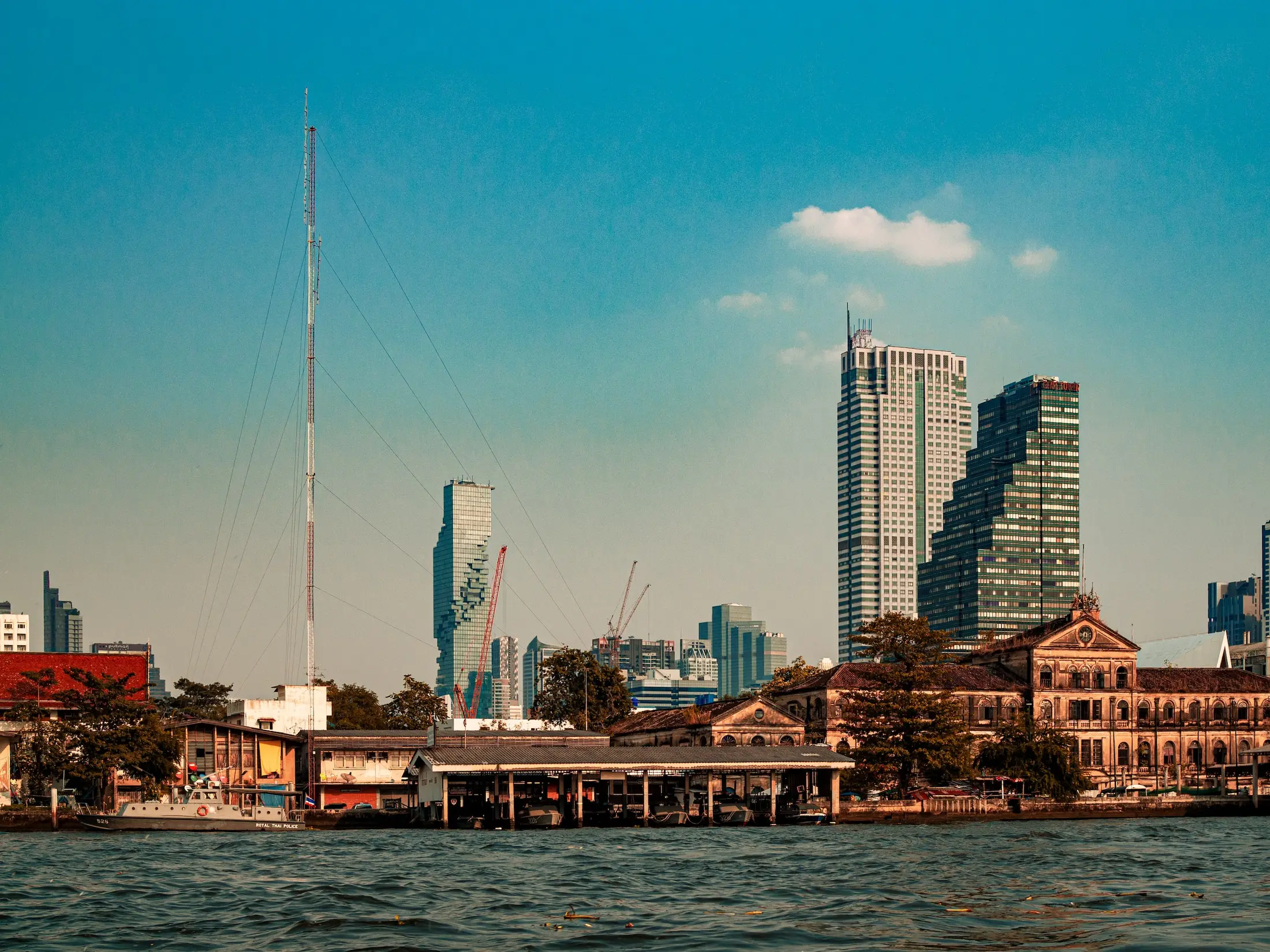
Bangkok became the capital of Siam in 1782, but the place was important before that. Its location on the Chao Phraya River made it useful for trade, defense, canals, boat travel, and control of movement between the Gulf of Thailand and the inland capitals.
The city grew in layers. First came river settlement and Thonburi. Then Rattanakosin, the Grand Palace, Wat Phra Kaew, and the royal-temple core. Later came canals, Chinese trade, shophouses, the Bowring Treaty, new roads, Western contact, railways, government reforms, wartime disruption, student movements, postwar expansion, highways, malls, the 1997 financial crisis, airports, protest spaces, floods, and mass transit.
Use this page as the timeline. Use the linked subpages when you want one period, place, or turning point explained without mixing it into a generic sightseeing article.
International trade and modernization
The Bowring Treaty of 1855 was one of the turning points that pushed Bangkok beyond its older role as a regional royal capital. Signed between Siam and Britain during the reign of King Rama IV, it opened Siam more widely to international trade and made Bangkok more important to foreign merchants, diplomats, shipping firms, and commercial houses.
That shift changed the riverfront. Embassies, consulates, warehouses, churches, hotels, and trading districts grew along the Chao Phraya and nearby roads. Bangkok modernized quickly, but Siam retained its independence. The treaty is the bridge between canal-and-river Bangkok and the later modernization visible in Charoen Krung Road and the reforms associated with Rama V.
Student movements and political memory
Modern Bangkok history is also political history. In 1973, student-led demonstrations centered on Thammasat University and Ratchadamnoen Avenue grew into a large democracy movement. The protests helped bring down the military government and began a short democratic period, making 14 October 1973 a major milestone in modern Thai history.
That period ended violently. On 6 October 1976, students and protesters at Thammasat University were attacked after weeks of political tension, and a military coup followed the same day. It remains one of the darkest chapters in Thailand’s modern history and still shapes political memory in Bangkok. Read Democracy Monument and protest history for the city geography behind these events.
Boom, crisis, and global Bangkok
Bangkok’s postwar growth accelerated through the 1980s and early 1990s, when finance, property, tourism, hotels, shopping districts, and office towers changed the skyline. The 1997 Asian Financial Crisis began when the Thai baht collapsed, and construction stopped across Bangkok. Unfinished skyscrapers and stalled property projects became visible reminders of how quickly the boom ended.
The city recovered and kept expanding. The BTS opened in 1999, the MRT Blue Line followed in 2004, and Suvarnabhumi Airport opened in 2006 as Thailand’s main international gateway. Better air and rail connections helped Bangkok become a larger tourism, business, and aviation hub, even as the city kept the older river, temple, shophouse, and protest layers underneath.
Bangkok history timeline
- Before 1782: The Bangkok area works as a river settlement, customs point, canal landscape, and defensive position before it becomes the capital. Read Bangkok before 1782.
- 1767: Ayutthaya falls, pushing Siam’s political center downstream toward Thonburi and Bangkok.
- 1768: King Taksin establishes Thonburi as the capital on the west bank of the Chao Phraya. Read the Thonburi capital period.
- 1782: King Rama I founds the Chakri dynasty and establishes Rattanakosin on the east bank. Read the founding of Rattanakosin.
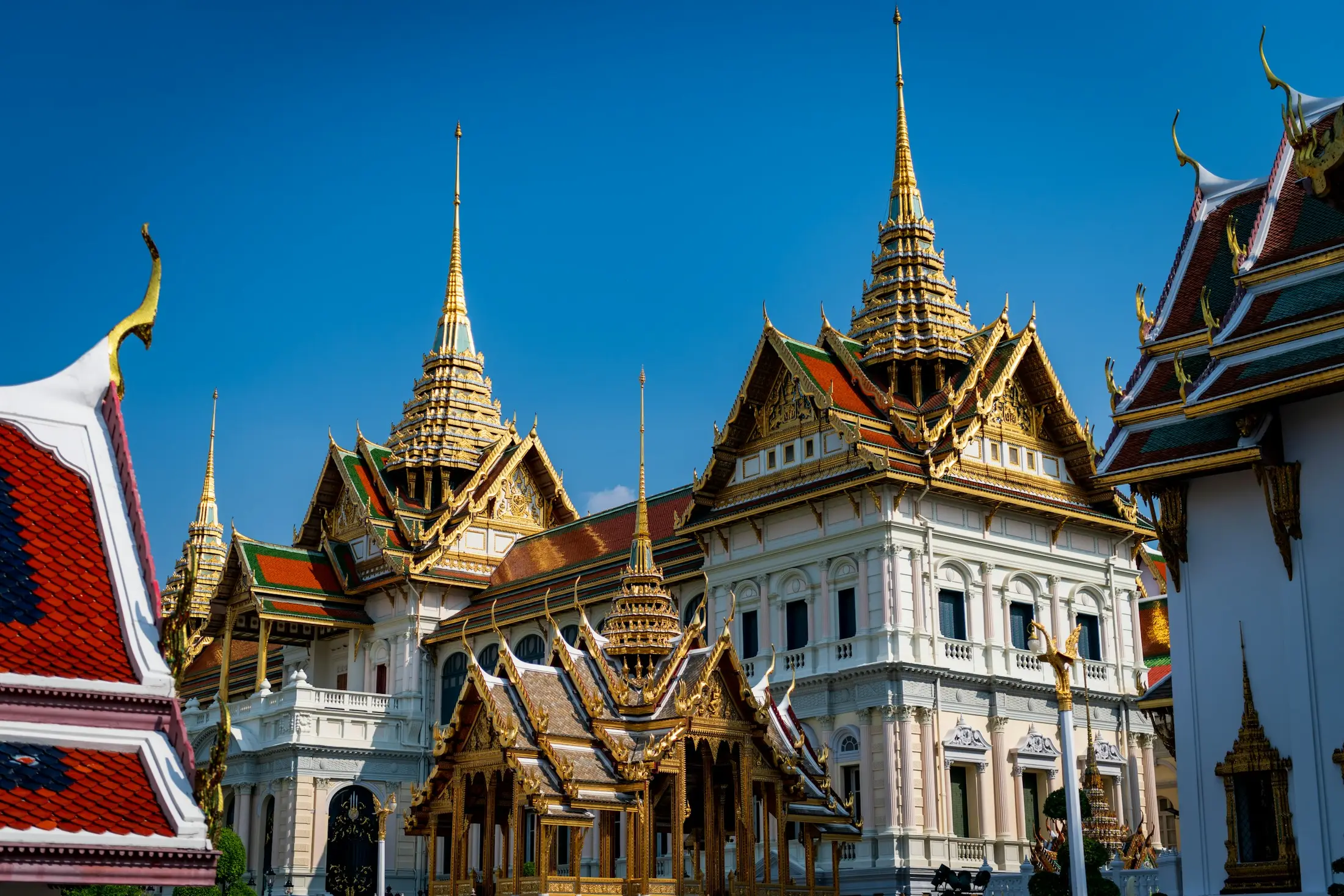
- 1780s onward: The Grand Palace and Wat Phra Kaew define the royal and religious center of the new capital. Read the Grand Palace and Wat Phra Kaew history.
- 18th-19th centuries: Bangkok grows as a canal city where water routes shape trade, food, settlement, and daily life. Read Bangkok as a canal city.
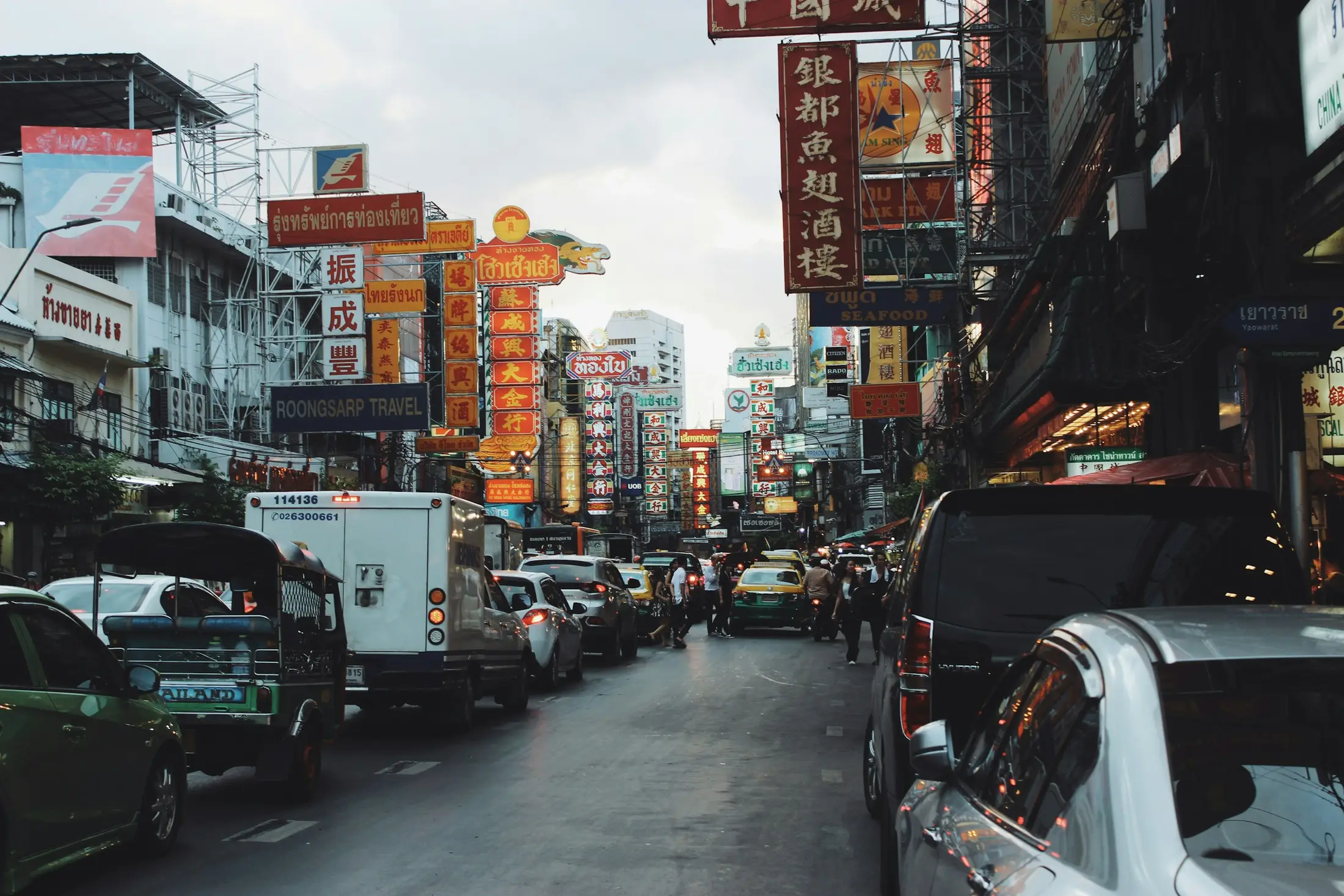
- 19th century: Chinese trade, labor, temples, gold shops, markets, and shophouses make Yaowarat and nearby streets central to Bangkok’s commercial life. Read Chinatown and Yaowarat history.
- 1855: The Bowring Treaty opens Siam more widely to global trade and brings more foreign merchants, diplomats, and commercial activity to Bangkok.
- 1860s onward: Charoen Krung becomes Bangkok’s first modern road and a corridor of embassies, hotels, river trade, churches, shops, and later creative revival. Read Charoen Krung Road history.
- 1868-1910: King Rama V’s reign accelerates reforms in administration, infrastructure, education, medicine, and urban planning. Read Rama V and Bangkok modernization.
- 1932: The end of absolute monarchy changes the political role of Bangkok and introduces new symbols, institutions, and public spaces. Read Bangkok and the 1932 revolution.
- 1941-1945: World War II brings Japanese troops, Allied bombing, infrastructure pressure, and wartime uncertainty to Bangkok. Read Bangkok during World War II.
- 1950s-1980s: Bangkok expands fast through highways, industry, migration, universities, suburbs, hotels, tourism, and shopping districts. Read postwar Bangkok expansion.
- 1973: Student-led demonstrations in Bangkok help bring down the military government and begin a short democratic period.
- 1976: The Thammasat University massacre and subsequent military coup become a lasting trauma in Thai political memory. Read Democracy Monument and protest history.
- 1980s-1990s: Finance, tourism, property, retail, hotels, and offices drive Bangkok’s economic boom.
- 1997: The Thai baht collapses, the Asian Financial Crisis begins, and stalled construction leaves unfinished towers across Bangkok.
- 1999: The BTS Skytrain opens and starts changing how central Bangkok moves.
- 2004: The MRT Blue Line opens, adding another layer to the city’s transport map.
- 2006: Suvarnabhumi Airport opens as Thailand’s main international gateway.
- 2011: Major regional floods show that water management remains central to Bangkok’s future. Read Bangkok floods and water history.
- Present: Bangkok is one of Southeast Asia’s largest global cities, with river, road, rail, airport, market, mall, temple, political, and migrant histories all visible at once. Read modern rail and megacity Bangkok.
Where to see Bangkok history first
Start in Rattanakosin if you want the clearest old-capital route. The Grand Palace, Wat Pho, Wat Arun, Bangkok National Museum, and Wat Saket explain more in one day than a scattered checklist across the city.
Then add the river, Yaowarat Road, Talat Noi, and Charoen Krung. That second layer shows Bangkok as a trading city, food city, migration city, and modernizing city, not only a royal capital.
For modern history, add Ratchadamnoen Avenue, Democracy Monument, the Thammasat area, Siam, Silom, Sathorn, Sukhumvit, and the airport rail corridor. Those places show the political, economic, and transport layers that shaped Bangkok after World War II.
Before and Around the Founding
The river settlement, Thonburi capital, and early Rattanakosin choices that made Bangkok the center of Siam.
Bangkok Before 1782
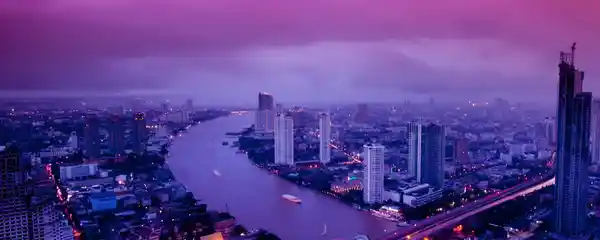
How the Bangkok area mattered before it became the capital: river settlement, trade route, customs point, canals, and defense.
The Thonburi Capital Period
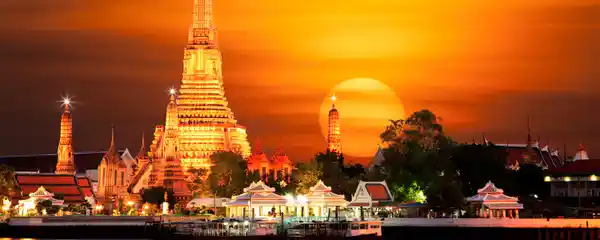
The short but important period when Thonburi was Siam's capital after Ayutthaya fell and before Rattanakosin was founded.
The Founding of Rattanakosin
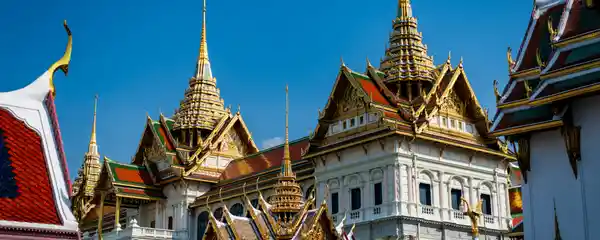
How King Rama I founded Rattanakosin in 1782 and made the east bank of the Chao Phraya the new royal capital.
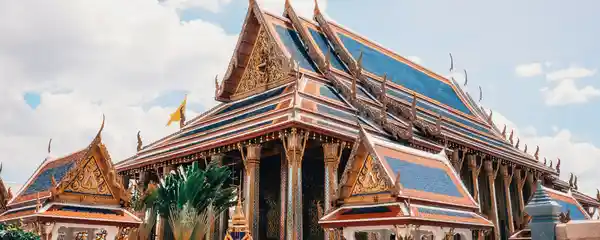
Grand Palace and Wat Phra Kaew History
Why the Grand Palace and Wat Phra Kaew became the royal and religious heart of Rattanakosin Bangkok.
Canals, Trade, and Modernization
The canal city, Chinatown, Charoen Krung, and 19th-century reforms that connected old Bangkok to global trade and modern administration.
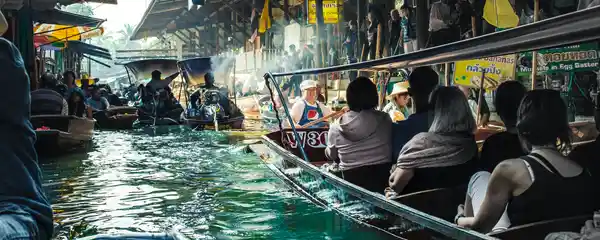
Bangkok as a Canal City
How canals shaped Bangkok's trade, food, transport, settlement, markets, and daily life before roads dominated the city.
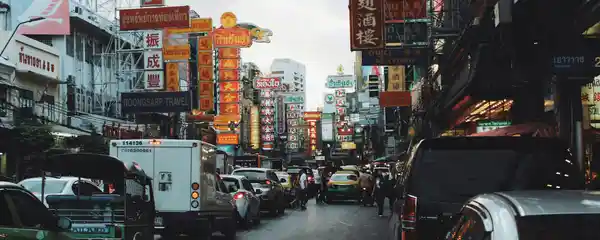
Bangkok Chinatown and Yaowarat History
How Chinese migration, trade, temples, gold shops, food, shophouses, and Yaowarat Road shaped Bangkok's commercial life.
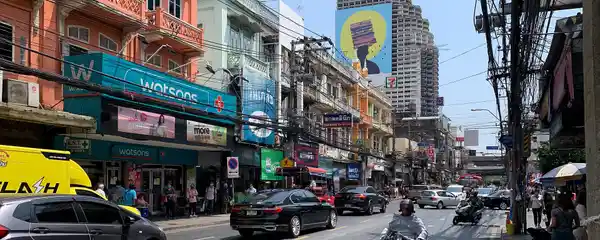
Charoen Krung Road and Bangkok Modernization
Why Charoen Krung Road became a symbol of 19th-century Bangkok modernization, river trade, embassies, hotels, and urban change.
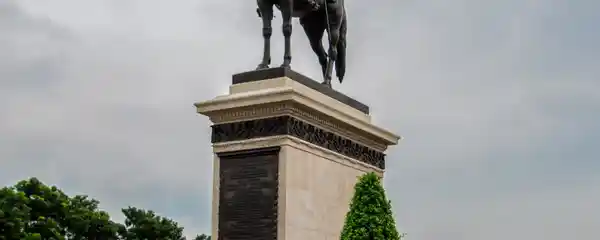
Rama V and Bangkok Modernization
How King Rama V's reign accelerated Bangkok's reforms in administration, infrastructure, education, medicine, rail, roads, and urban life.
Politics, War, and Expansion
The constitutional era, wartime Bangkok, postwar growth, protest spaces, floods, mass rail, and the modern megacity.
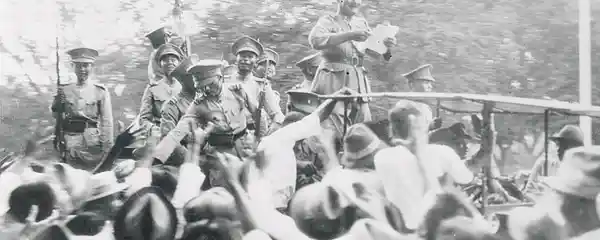
Bangkok and the 1932 Revolution
How the 1932 revolution changed Siam's political system and gave Bangkok new institutions, symbols, and public political spaces.
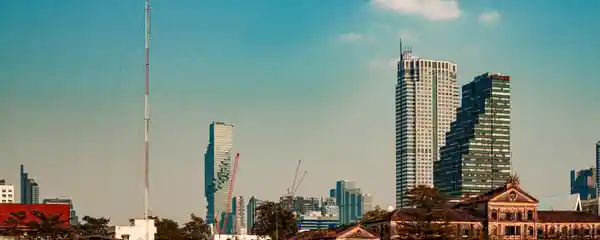
Bangkok During World War II
A practical overview of Bangkok during World War II, including Japanese presence, Allied bombing, transport pressure, and wartime disruption.
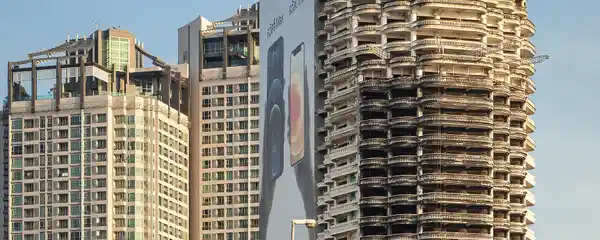
Postwar Bangkok Expansion
How Bangkok expanded after World War II through highways, migration, industry, universities, hotels, suburbs, shopping districts, and tourism.
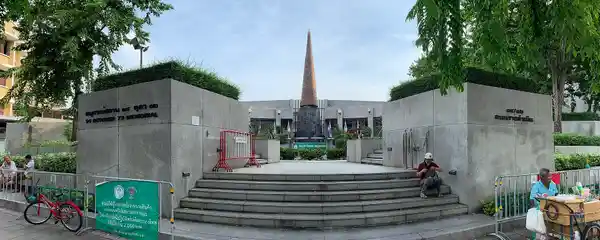
Democracy Monument and Bangkok Protest History
Why Democracy Monument, Ratchadamnoen Avenue, Sanam Luang, universities, and central districts matter in Bangkok's protest geography.
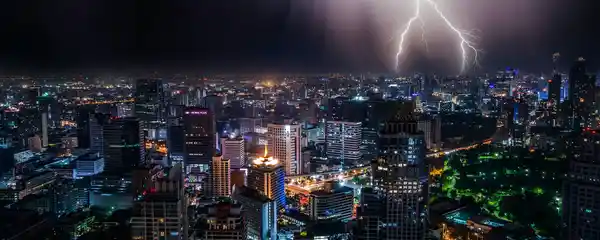
Bangkok Floods and Water History
How river flooding, canals, drainage, land subsidence, monsoon rain, and the 2011 flood show that water still shapes Bangkok.
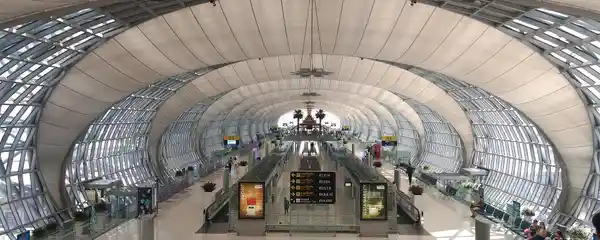
Modern Rail and Megacity Bangkok
How BTS, MRT, Airport Rail Link, malls, high-rises, outer extensions, and new districts reshaped Bangkok's modern urban geography.
Related Attractions for Bangkok History
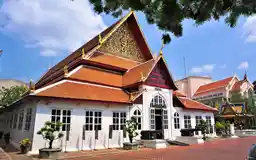
Bangkok National Museum
Google Rating
9,953 reviews
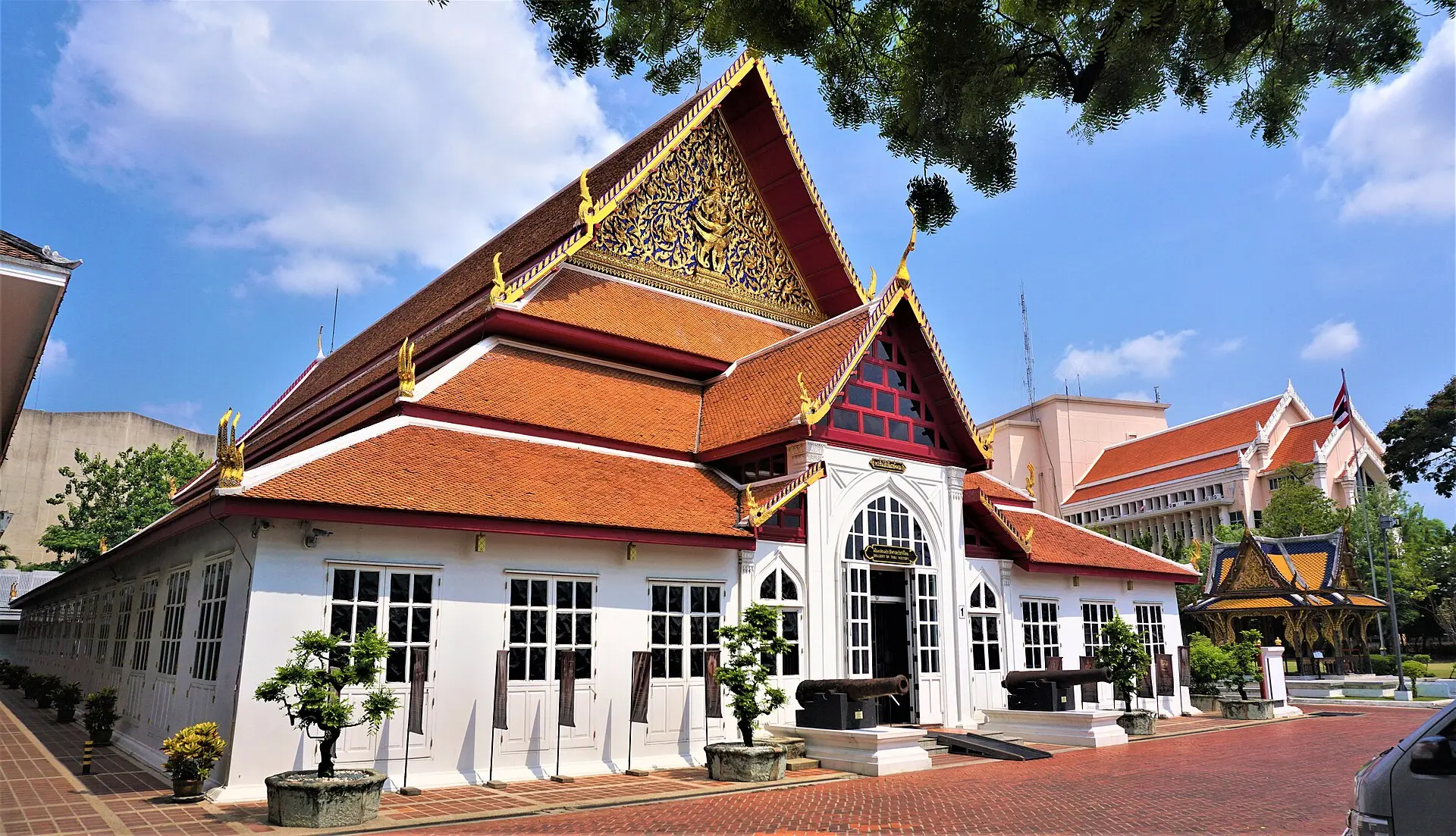
Southeast Asia's largest museum collection spanning Thai art, royal regalia, and artefacts from prehistory to the Rattanakosin era.
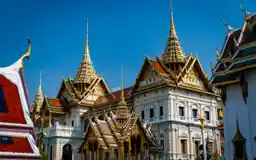
Grand Palace
Google Rating
80,541 reviews
Bangkok's most iconic royal complex featuring the sacred Emerald Buddha and stunning Thai architecture spanning over 200 years of history.

Jim Thompson House
Google Rating
17,609 reviews
A beautifully preserved collection of traditional Thai houses filled with Southeast Asian art, built by the American silk entrepreneur who vanished in 1967.
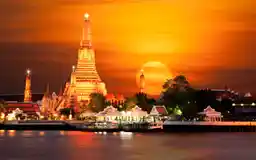
Wat Arun
Google Rating
110 reviews
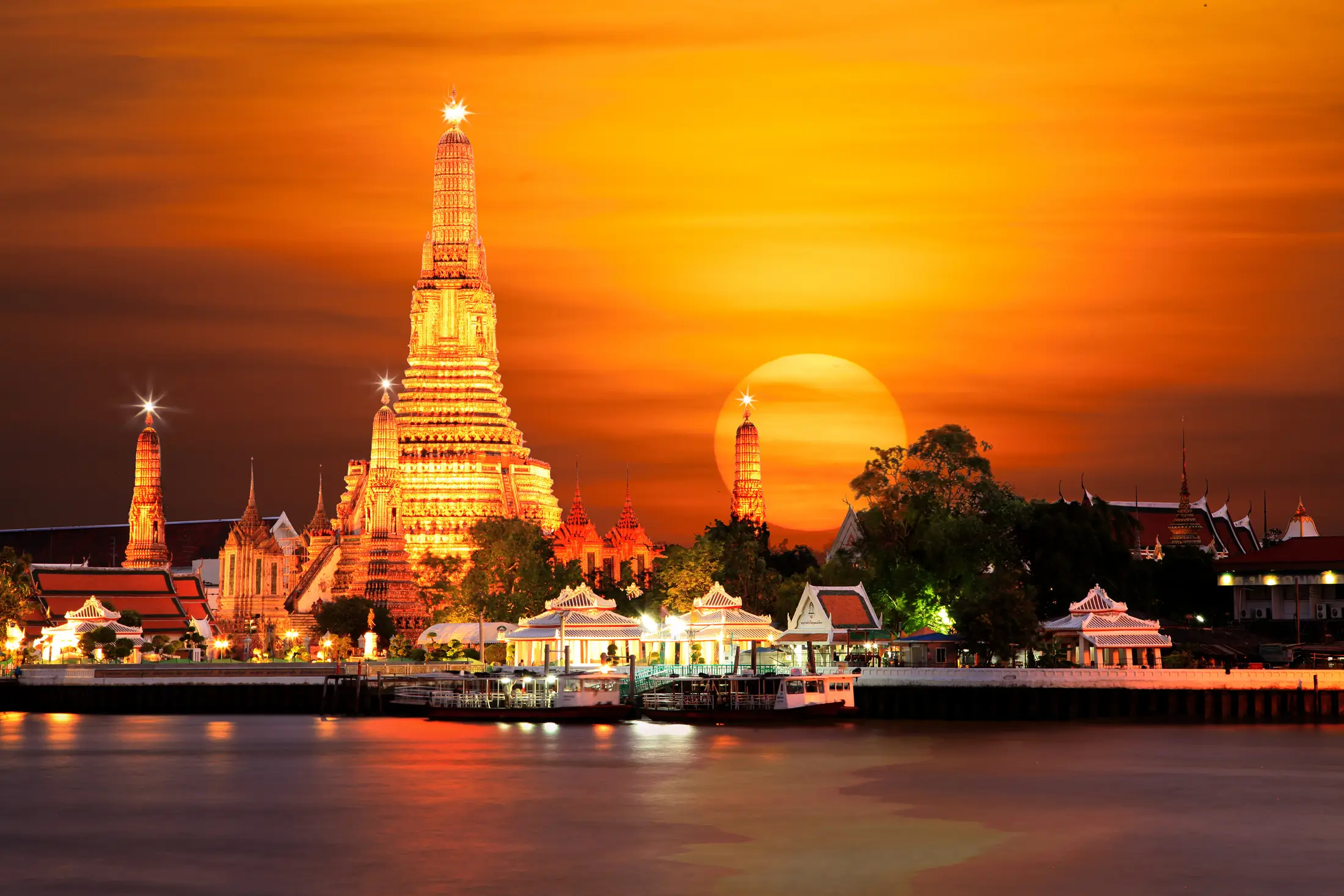
The Temple of Dawn with its towering porcelain-encrusted spire is one of Bangkok's most photogenic landmarks on the Thonburi riverside.

Wat Pho
Google Rating
38,307 reviews
Home to the massive 46-metre Reclining Buddha and Thailand's oldest traditional massage school, just south of the Grand Palace.
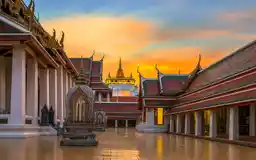
Wat Saket
Google Rating
8,174 reviews
Climb 344 steps to the Golden Mount for sweeping 360-degree views over Bangkok's old town, temples, and rooftops from an artificial hill.
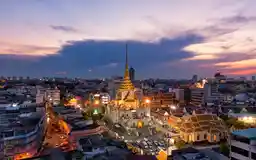
Wat Traimit
Google Rating
22,494 reviews
Home to the world's largest solid gold Buddha image, a 5.5-tonne statue accidentally discovered under a plaster exterior in the 1950s.