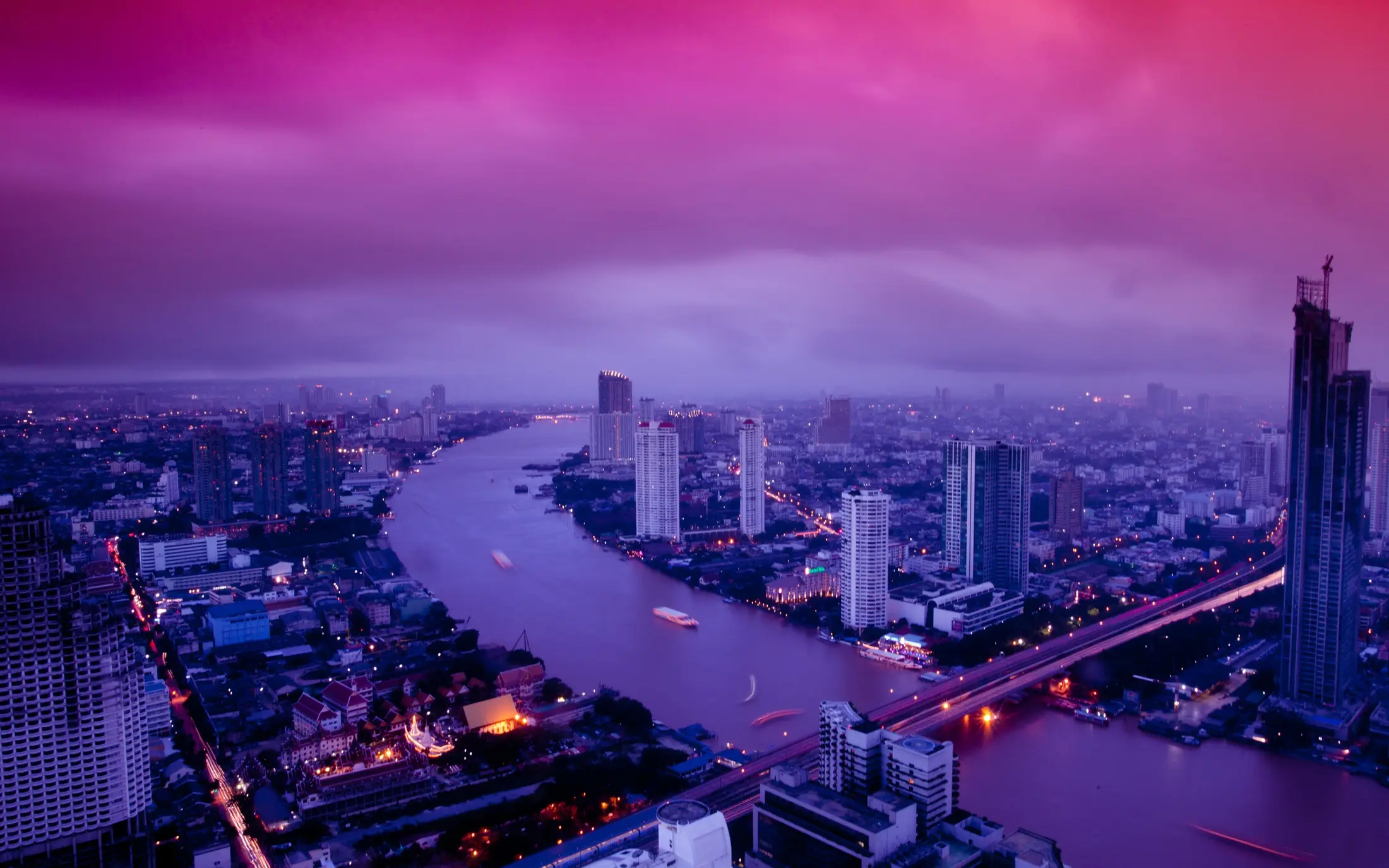
The best area to live in Bangkok is the area that makes an ordinary week work. Commute, school run, rent, groceries, hospital access, rain-day transport, noise, and the last kilometre from the station matter more than a neighbourhood’s reputation.
Use this guide as a comparison framework, not a ranking. Two people with the same budget can make opposite choices because one works near Silom and the other has children at a school far east of central Bangkok.
Start with the non-negotiable route
Put the place you must reach most often at the centre of the decision:
- office or regular client location;
- school and the real morning drop-off route;
- university or language school;
- hospital needed for ongoing treatment;
- family member or care responsibility;
- airport or intercity terminal used frequently.
Test the journey at the time it will happen. A 25-minute midday map estimate can become a poor weekday routine when a taxi must cross traffic before reaching rail.
The best rail-linked home is not always beside the nearest station. A direct line with a comfortable eight-minute walk may be better than a closer station requiring two crowded transfers. Use Getting Around Bangkok to plan the combination and the Bangkok transport directory for specific lines and stations.
Quick area comparison
| Area type | Areas to compare | Strongest reason | Main compromise |
|---|---|---|---|
| Central interchange | Asok, Silom | Two rail systems and broad cross-city access | Crowds, traffic, and central pricing |
| Polished Sukhumvit | Phrom Phong, Thonglor | Dining, services, condos, and international daily life | Premium cost and side-street traffic |
| Upper-Sukhumvit balance | Ekkamai, Phra Khanong, On Nut | BTS access with a more residential range of prices | Longer trips west and uneven last-kilometre access |
| Central residential | Ari, Sathorn | Strong local routine without living inside a mall district | Exact station access varies sharply |
| MRT-led growth corridors | Ratchada, Rama 9 | Offices, malls, condos, and Blue Line access | Heavy road corridors and less old-city atmosphere |
| Old Bangkok lifestyle | Banglamphu, Yaowarat | Food, history, local commerce, and distinctive street life | Less convenient for many office and school commutes |
The table narrows the search. The individual area guide should make the final comparison.
Asok: maximum connection, minimum calm
Asok is the easiest default when work and daily appointments are spread across Bangkok. BTS and MRT meet at one of the city’s busiest junctions, with hotels, condos, offices, shopping, gyms, hospitals in the wider Sukhumvit corridor, and services nearby.
The cost is noise, traffic, crowds, and a commercial atmosphere. Check which side of the junction the building uses. A condo described as near Asok can still involve an unpleasant road crossing or a deep-soi connection.
Choose Asok for network access, not neighbourhood romance.
Silom and Sathorn: central work and different evenings
Silom combines BTS and MRT, offices, hospitals, restaurants, hotels, nightlife, and access to Lumphini Park. It suits people who want a dense central routine and do not mind weekday intensity.
Sathorn spreads farther through office and residential streets. It can feel calmer and more spacious, with strong hotels, serviced apartments, embassies, schools, and dining. Its weakness is inconsistent rail access: two Sathorn addresses can create very different commutes.
Choose Silom when the interchange and street-level convenience win. Choose Sathorn when the exact building gives a better home routine and the commute is already solved.
Phrom Phong: easiest premium daily life
Phrom Phong places BTS, major malls, supermarkets, restaurants, Benchasiri Park, hotels, condos, and Japanese services into a compact central area. It is one of the easiest places to establish a comfortable routine quickly.
That comfort is priced accordingly. Traffic in the side streets and distance from the BTS still matter. A more expensive area does not protect you from choosing a building with a poor last connection.
Phrom Phong works for residents who will actually use the park, services, groceries, and Sukhumvit position rather than paying for a reputation they rarely benefit from.
Thonglor and Ekkamai: lifestyle versus practical spread
Thonglor has Bangkok’s strongest destination-dining and upscale nightlife identity. It suits people whose social and dining life is already concentrated there. Many venues and homes sit deep along Sukhumvit 55, making taxis, motorcycle taxis, or shuttles part of the routine.
Ekkamai is more mixed, with the Eastern Bus Terminal, cafes, bars, schools, community malls, condos, and older residential streets. It can offer a broader daily balance, but it is also spread along a long road.
Choose Thonglor when the lifestyle is the point. Choose Ekkamai when upper-Sukhumvit access and a mixed residential routine matter more than being in the centre of the dining scene.
Ari: a local routine on the BTS
Ari combines BTS access with cafes, restaurants, offices, condos, and lower-rise side streets. It suits residents and remote workers who prefer a neighbourhood circuit to a mall-led routine.
Ari is not quiet everywhere and is not cheap simply because it sits north of Siam. The hotel and rental market is smaller than Sukhumvit’s, and many destinations sit inside side streets. It works best when the direct BTS corridor matches the commute.
Phra Khanong and On Nut: value depends on the route
Phra Khanong and On Nut can offer more housing choice and a more everyday residential rhythm than prime Sukhumvit. They remain on the BTS, with supermarkets, food, services, and condos around the stations.
The tradeoff is cumulative travel time. A home that saves rent but adds two long daily journeys may not be cheaper in any meaningful sense. Check crowded peak-direction travel, building shuttle dependence, and the walk home after rain.
These areas work when the budget saving is real and the central commute remains acceptable.
Ratchada and Rama 9: MRT-led city life
Ratchada and Rama 9 combine MRT access, offices, malls, condos, local food, and entertainment. They can suit residents whose work and daily life sit on the Blue Line or in the east-central business corridor.
Large roads and traffic shape both areas. Inspect the exact crossing and station entrance. A tower visible from the MRT may still sit on the wrong side of a difficult road.
Families should choose the school route first
For families, school location can dominate the housing decision. A famous central area is a poor choice if the school run crosses Bangkok twice a day.
Check:
- realistic morning and afternoon travel;
- school transport and pickup rules;
- pavement, crossings, and child safety around the building;
- nearby paediatric and emergency care;
- playground, park, pool, and indoor options;
- grocery routine and food everyone can use;
- space, noise, lift reliability, and balcony safety.
Use Raising a Child in Bangkok and the Bangkok education guide before narrowing the housing search. The Bangkok hospitals guide helps identify medical access.
Build the budget around the full home
Rent is only the headline. Compare:
- deposit and advance rent;
- electricity and water terms;
- internet installation;
- furniture and appliance gaps;
- parking or building shuttle;
- daily station connection;
- school and hospital transport;
- move-in, cleaning, agent, and exit conditions.
The Cost of Living in Bangkok guide provides the broader framework, while Money in Bangkok explains deposits, payment methods, cards, and budgeting.
Rent before buying
Bangkok areas look different after you have lived through heat, rain, traffic, construction, school runs, deliveries, and late returns. Rent first unless you already understand the building, legal position, finances, and long-term routine.
The Buying Property in Bangkok guide is an overview, not legal advice. Use a qualified independent professional before making a property commitment.
Test an area before signing
Spend time around the exact building on a weekday and weekend. Then test:
- The commute at the real hour.
- The complete walk from station or pickup point.
- Groceries and an ordinary evening meal.
- Noise after dark and early in the morning.
- Mobile signal and internet options.
- Rain-day taxi or shuttle access.
- The nearest suitable hospital.
- Building management, maintenance, and parcel handling.
Common mistakes
- Choosing the neighbourhood before the workplace or school.
- Believing every property marketed with an area name is close to its station.
- Optimising for weekend cafes instead of weekday routine.
- Ignoring the road crossing and last kilometre.
- Signing a long lease immediately after arrival.
- Comparing rent without utilities, deposits, and transport.
- Buying before living in the building and understanding the legal position.
The best Bangkok area is not the one most people recommend. It is the one that removes the most repeated friction from your own week.